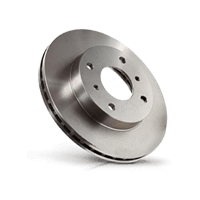
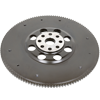
The best and most economical upgrade is using the 9.4 inch vented rotors from the '83 & '84 GTI's. With new 9.4 inch vented rotors and the right performance pads, you will have much better braking capacity without having to swap master cylinders and proportional rear valves.
If the hub is the original A1, you can get adapters from people here on the tex and use G60 rotors with your original calipers. I had this setup and I strongly recommend it if you are a spirited driver like I am
For the rotors I went with Brembos they were like $120 pair of fronts and the rear I had OEM rear drums they were $150 a pair. I got a pair of Axxis Organic pads like $49 a pair.
just installed the power disks and mintex redboxes on my 90 b3 passat. i drive \"spirited,\" (fast) as well, and from what ive felt, and heard, these rotors are nice. the way i look at it, if the are good for the new beetle cup car and lupo cup car, theyre good enough for me.
OK. Thanks for all the responses!! I replaced the rear rotors (with new Tar-Ox ones) myself, 18 months ago. I bought new ABS Rings for both sides and fitted them to the disks in the way described in the Bentley manual. I've just had a feel behind the rotors and they don't seem to have come loose or anything...
It was my understanding porsche rotors are forged as one piece with holes already in them, not drilled post facto. nothing either way, i have brembos so im bias. but i will say the cadium plating is nice in keeping rust and what's nots away. bonus, only $125 for the pair when i got them; 11\" rotors, Xdrilled/slotted. as for pedal fade, by SS lines and kiss it goooodddbyeeeeeee
In general, race cars will use flat (not drilled, not slotted) rotors if possible, or if restricted by the rules. If restrictions on wheel or rotor sizes are such that it's not possible to get fade free braking without resorting to slots or cross drilling, then slotted (or cross drilled) rotors are used as a last resort to reduce fade. For example, in SCCA club racing, for the improved touring category, drilled or slotted rotors are prohibited. Only stock replacement rotors (stock diameter, stock thickness and configuration) are allowed. Where materials and pads are unrestricted, even though size might be restricted, teams tend to go without drilling or slotting if they can get the brakes to operate fade free with flat rotors. Most Formula one teams today use 275mm (10.9\") flat surface rotors (ventilated, two plate rotors with vents between the plates, but no crossdrilling or slotting). I'm not sure if the rotors are limited to that size by the regs, or if that's the largest rotor that fits within the required wheels, but that's what they run. Since they can run full carbon rotors and carbon pads, there's no fade issues and there's no reason to slot or drill the rotors. Actually, slots or cross drilling would wear the pads quicker and would be a disadvantage for them. In Nextel Cup (formerly Winston Cup), there is a maximum wheel diameter of 15\" and wheels must be steel (alloy wheels are prohibited). Those cars weigh 3400 pounds, too, and the air flow to the brakes with the steel wheels is poor. Those teams tend to run slotted rotors, though they change rotors for every race weekend (some teams change rotors several times during practice and qualifying and start the race on another new set of rotors). They aren't too concerned with fatigue life issues and brake pad wear issues on their brakes. If the pads wear too quickly, they start the race with thicker pads. In sports car racing, ALMS prototypes generally try to run big enough rotors and wheels so they can avoid drilled or slotted rotors. On the long endurance races, the added pad wear from drilled or slotted rotors is significant and can require additional long pit stops to change brake pads more frequently. If you can get the brakes working fade free without slotted rotors, you'll have the advantage of fewer brake pad change pit stops. So most teams try to run rotors with flat surfaces in the long endurance races. For sprint races, they might go to slotted rotors at tracks that are particularly hard on brakes because they might have fade issues that the slots help resolve. For the GT classes in ALMS, the cars are heavier and the thermal loads on the brakes are higher, so they are more likely to use slotted rotors. I don't think many teams use drilled rotors any more. Drilled rotors have serious cracking problems and slotted rotors are much less likely to crack. But even when race teams use slotted or drilled rotors, they use only well engineered slotted rotors when they go to slotted rotors, or very well engineered drilled rotors if they use drilled rotors. There are a few well engineered slotted rotors (ATE Power Discs come to mind) that are sold through retail channels. And most of the Brembo and some of the Zimmerman cross drilled rotors that are availbe through retail sources are very well engineered, too. Most of the rest of the \"tuner\" sourced cross drilled and/or slotted rotors are not as well engineered. And these can cause very serious problems due to design compromises. The \"custom made\" rotors that are made this way are often purely decorative, and to someone who knows the engineering principles behind drilled or slotted rotors, they just look stupid. So, for your VW, you'd be better off running better pads (higher cF, higher operating temperature range) on stock rotors. If you're already running the highest performance pad that's feasible and you are still having issues with fade due to racing or aggressive track driving or very aggressive canyon runs, then slotted rotors might be something to consider. Bigger brakes might be something to consider as well. But you can go way, way better than Mintex Red Box and get much, much better performance on stock rotors, without going to slots or cross drilling.
Pros:flat rotors preferred if possible
Cons:drilled/slotted rotors crack, wear pads faster, difficult to resurface
I found another set of rotors offered by Futrell and i think i'm gonna be goin with these ones They are brembo cross-dimpled/slotted rotors only $140 for a pair of 9.4\" and i think i'll use Mintex Red-Box pads with these thanks for all the feedback
The front rotors were in a box from Zimmerman and rear were from Brembo. Just about from the start the brakes slightly squealed. The noise gradually increased that nearly each time the brakes were stepped on they squealed. After about 2K miles the noise got to the point of being excessive. They squeal in the morning when cool when slowing from 20MPH or warm and hot when slowing from 45+MPH. The only way to make them silent is to slam on them hard, but the next time they will squeal as well. In addition to the noise, the rotors started developing rust on the hub sections.